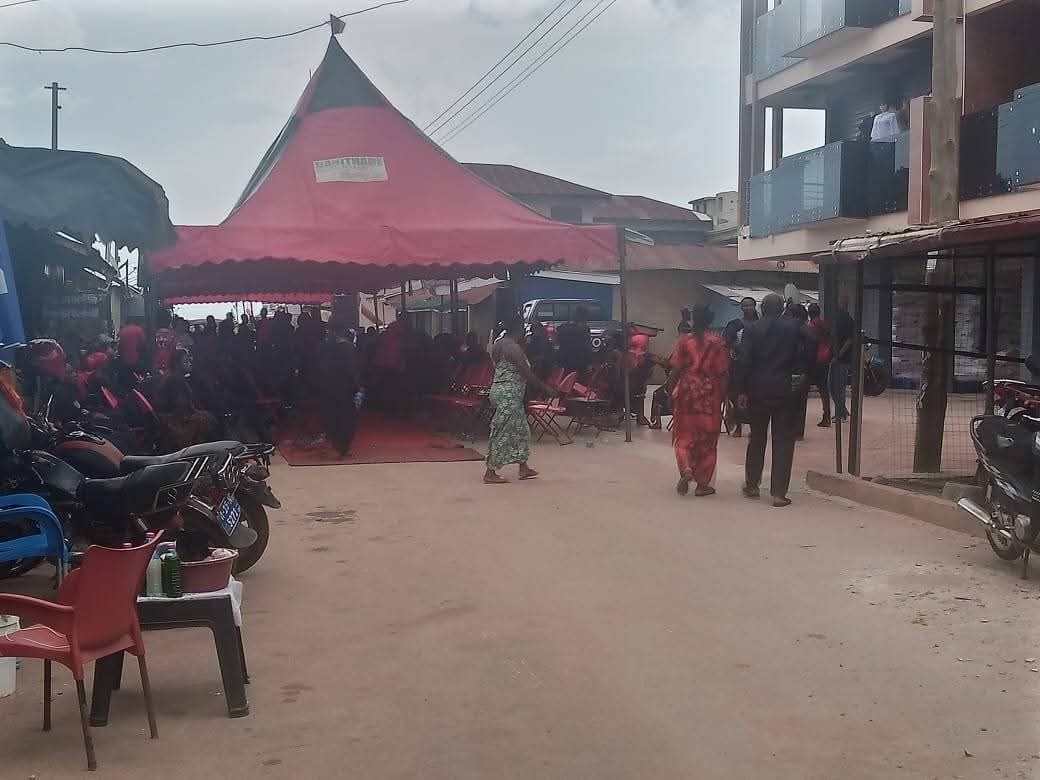

In many Ghanaian communities, funerals are not just ceremonies, they are deeply rooted expressions of love, culture, and respect for the departed. They bring families together, reconnect old friends, and remind us of our shared humanity. But in recent times, a worrying trend has emerged in Sunyani Municipality; one that is slowly turning moments of mourning into sources of inconvenience, frustration, and even danger.
Access roads meant to serve as lifelines for movement, commerce, and emergency services are increasingly being blocked for social activities, particularly funerals. What was once an occasional disruption has now become a frequent occurrence, and the consequences are far-reaching.
Imagine a trader trying to get goods to the market on time, only to be delayed for hours.
Picture a sick patient in an ambulance, stuck in traffic because a road has been taken over by canopies and loudspeakers. Consider workers, students, and commuters whose daily routines are disrupted, sometimes with serious economic and personal consequences. These are not just inconveniences but are real-life challenges that affect productivity, safety, and quality of life.
Beyond the human cost, there is also a financial burden. Government invests significant resources into constructing and maintaining these roads. When they are misused or constantly obstructed, it undermines their purpose and reduces their lifespan.
The ripple effects thus lost man-hours, increased fuel consumption, delayed services, quietly drain the local economy.
What makes the situation even more concerning is the seeming inaction of authorities.
The Sunyani Municipal Assembly has a responsibility to regulate the use of public spaces and ensure that order is maintained. Yet, the continued blocking of major roads suggests a gap between policy and enforcement.
Interestingly, this is not a nationwide norm. In places like the Wenchi Municipality, where I hail from, such practices are rare. Social gatherings are held with a level of organization and respect for public space that allows life to go on uninterrupted. This shows that change is possible without sacrificing culture.
This is not about erasing tradition; it is about adapting it responsibly.
Funerals can still be meaningful and dignified without taking over public roads. Communities can make use of designated spaces, community centers, or open grounds that do not disrupt traffic or endanger lives.
The time has come for a collective rethink.
Authorities must enforce existing by-laws or introduce clearer regulations. Community leaders, families, and event organizers must also play their part by prioritizing the common good over convenience.
Culture should unite us, not inconvenience us. Respect for the dead should not come at the expense of the living.
Sunyani deserves better—order, respect, and a balance between tradition and modern urban life.
By: Lawrence Yeboah Gyan (Broadcast Journalist- Wisdom Fm)
University Relations Office- Catholic University of Ghana, Fiapre
Sompaonline.com