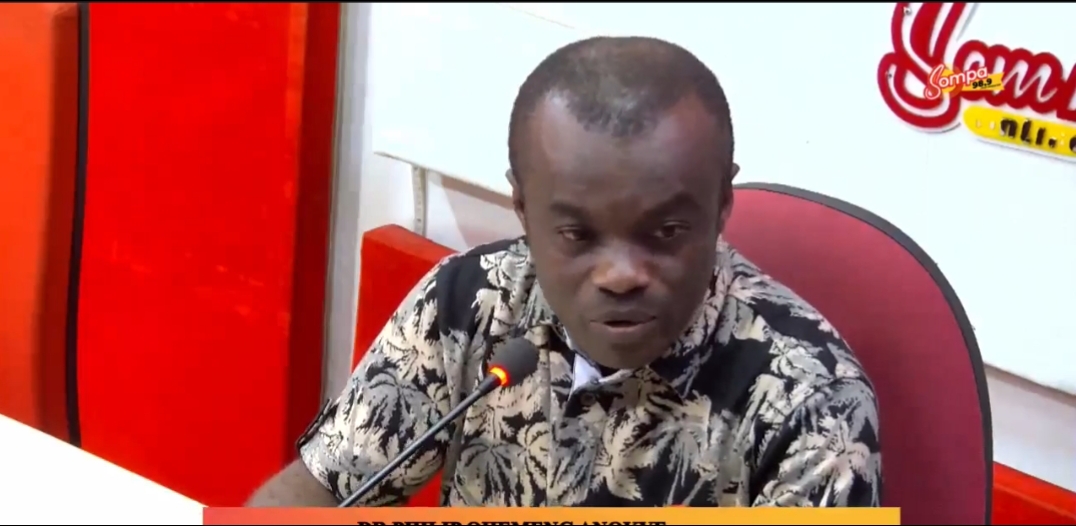

A Clinical Coordinator of Chiraa Government Hospital, Dr. Philip Ohemeng Anokye, has called on the media and the public to focus attention on the weaknesses within Ghana’s healthcare delivery system rather than “crucifying” health professionals implicated in the death of road accident victim, Charles Amissah.
His reaction follows the decision by the Ministry of Health to subject seven health professionals from the Police Hospital, Greater Accra Regional Hospital and Korle Bu Teaching Hospital to disciplinary action over their roles in the death of the accident victim.
The disciplinary action follows findings by a committee established to investigate the circumstances surrounding Amissah’s death after a hit-and-run accident.
According to the committee, the victim did not die instantly from injuries sustained in the crash, but rather from prolonged and preventable blood loss due to failures in emergency medical care.
Speaking on ‘Ghana Nkomo’, a thursday socio-political show hosted by Akua Nyarko Abronoma at Sompa Fm-Sunyani, Dr. Anokye noted that while accountability was important, the broader conversation should center on the country’s struggling emergency response system and inadequate medical infrastructure.
“The media should desist from crucifying the health professionals but focus on discussing the loopholes in the health delivery system of the country,” he stated.
He stressed that Ghana’s ambulance system remains unreliable, making timely referrals difficult, especially in emergency trauma cases.
“The most important thing to me is our system. We don’t have enough and a reliable ambulance service. If you want to refer a patient from Chiraa to another hospital which is supposed to be within two hours, it becomes a challenge,” he said.
Dr. Anokye explained that trauma care depends heavily on what medical experts describe as the “golden hour” — the critical first 60 minutes after a severe injury during which prompt treatment can significantly improve survival chances.
“We have something in trauma called the golden hour. So, when you get a trauma patient and your capacity is low, you do resuscitation and quickly get a reliable ambulance to transport the patient to another hospital with a higher capacity,” he explained.
He further lamented the lack of critical medical equipment in many district hospitals across the country, including CT scan machines needed to diagnose serious head injuries.
“We don’t have some equipment like CT scans in district hospitals. If someone gets a head injury and is unable to speak, it is necessary to run a CT scan to determine the problem. Since we don’t have these facilities, the patient must be referred with a reliable ambulance to another hospital that has them,” he added.
Dr. Anokye, however, revealed that the lack of emergency transport systems and critical healthcare equipment continues to expose patients across the country to avoidable deaths during emergencies.
Sompaonline.com/Derrick Djan