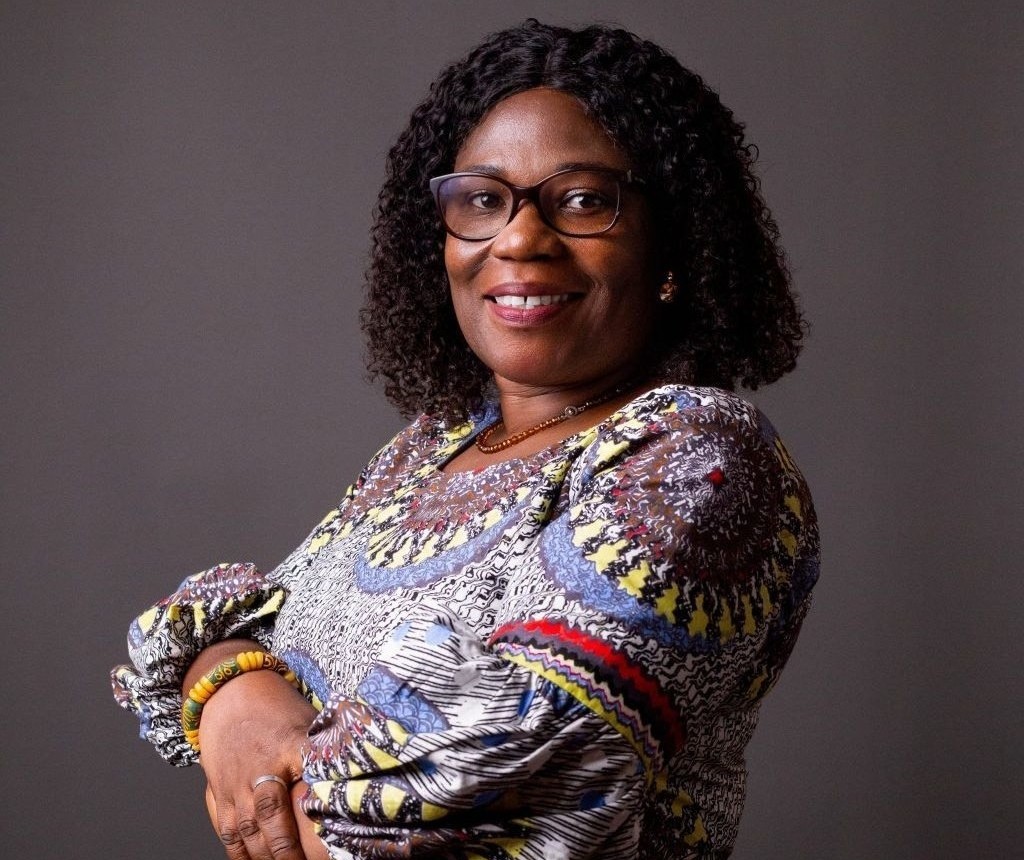

Prof. Irene Egyir, an Agricultural Economist at the University of Ghana (Legon) with the Department of Agricultural Economist and Agribusiness, has urged women farmers in the country to prioritize acquiring technological knowledge to boost their agricultural productivity.
The former Dean for the School of Agriculture at the University of Ghana has admonished women in agriculture to reconsider their spending habits, by cutting down on non-essential expenses like cloth, but invest in learning modern farming techniques that can enhance their farm yields.
She expressed this in a media engagement at the final closeout workshop of the DANIDA Fruitbunch Project held at the University of Cape Coast (Ghana) on Tuesday, November 18, 2025.
Prof. Egyir's advise emphasizes the importance of women farmers' role in agriculture and their potential to drive change through informed decisions and innovative practices.
The DANIDA Fruitbunch Project is an initiative aimed at enhancing food security, improving agricultural productivity to build climate resilience in Ghana.
The project, sponsored by the Danish Development Organisation (DANIDA), focuses on crops like eggplant and okra, and promotes the use of soil amendments like biochar and compost.
The project which offered the platform to train farmers in business acumen, entrepreneurship, and financial management, as well as practical techniques like seed nurturing with potting mix, crates, and trays had partners like Aarhus University (AU) in Denmark, the University of Cape Coast (UCC), University of Ghana and the Komenda-Edina-Eguafo-Abrem (KEEA) Municipality in the Central Region of Ghana to oversee its implementation.
Sabine Ravnsuov, a Professor with Aarhus University (AU) in Denmark, a Supervisor to the project and WP Coordinator for 3b, in sharing her thoughts, underscored the project as a fruitful one which is worth the effort attached to it, having reach the practical lives of farmers who have adopted to the project's outcome together with a number of scientific publications made out of it which makes the project very successful.
The project's Work-Package Lead for Socio-Economy, Simon Bolwig, also with Aarhus University described the Fruitbunch Project outcome as very productive, as it has seen to the training of many PhD and MPhil students both at UCC and the University of Ghana.
He noted that through these students, a lot of new knowledge has been gained on climate resilient technologies which could not have existed. Adding that he has equally chanced on the opportunity to collect enough practical knowledge from farmers through the field outreaches embarked upon.
Farmers who had the opportunity to be trained under the Fruitbunch Project, also expressed their heartfelt excitement for the privilege offered them to acquire hands-on training on their field of work which has positioned them high above their compatriots with regards to modern farming techniques which has aided them to become financially resilient through the application of their knowledge gained from the project.
Dr. Alexander Tetteh Kwasi Nuer, the WP4 Co-Principal Investigator also of the University of Cape Coast, mentioned that dissemination of the biochar, compost and vegetable technologies has aided farmers and agric extension staff by adopting a co-creation pathway at KEEA.
He continued to elaborate that the development of inclusive business model and cost benefit solutions, have led to a real time sustainability pathway beyond the project. This he mentioned serves as an important contribution of the Fruitbunch project in Ghana.
The Fruitbunch Project's key objectives focuses on equipping farmers with modern farming skills and best practices to strengthen resilience to climate change, create sustainable and inclusive business models to ensure farmers derive financial benefits from their products and apply university research to solve real-world challenges and improve agricultural development.
Sompaonline.com//Eric Annan