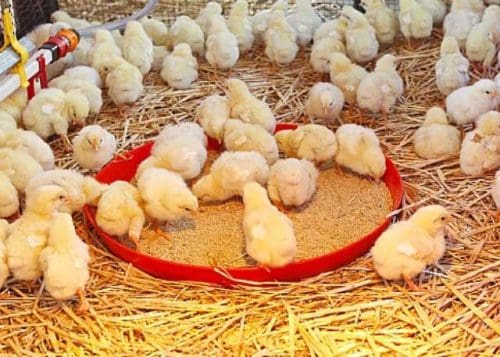

The Sunyani Municipal Directorate of Agriculture has outlined the criteria used in selecting beneficiaries for the government’s Nkoko Nketenkete poultry support initiative, aimed at reviving Ghana’s poultry industry, particularly in the Bono Region.
Speaking on the selection process in a telephone interview with Ama Konadu on ‘Adea Akye Abia’ morning show at Sompa Fm-Sunyani, the Sunyani Municipal Director of Agriculture, Mr. Owusu Banahene, said the Bono Region remains one of the country’s major poultry-producing areas, with farms ranging from small-scale to large-scale operations.
“When you come to the Bono Region, poultry farming is largely practised here. We have small-scale, medium-scale and large-scale poultry farmers across our districts,” Mr. Banahene noted.
According to him, the Nkoko Nketenkete initiative was introduced to help improve the poultry industry, which has declined in recent times.
He explained that the programme deliberately targets small- and medium-scale poultry farmers, who form the backbone of poultry production in the region.
“The main focus of the Nkoko Nketenkete initiative is to support small- and medium-scale poultry farmers to help revive the industry,” he said.
Mr. Banahene explained that agricultural extension officers were tasked to identify eligible farmers within their operational areas. However, he stressed that selection went beyond identification.
He said the Directorate carried out on-site inspections to assess whether prospective beneficiaries had the necessary infrastructure and equipment, including cages, well-ventilated poultry houses, secure fencing, feeders, drinkers, and appropriate brooding or heat sources such as charcoal pots, gas systems, or heat lamps for chicks.
Only farmers who met these requirements and demonstrated the capacity to properly rear and manage the birds, he added, were officially enrolled onto the programme.
The Nkoko Nketenkete initiative is expected to boost poultry production, strengthen local farming capacity, improve livelihoods, and contribute to food security in the Bono Region and across the country.
Sompaonline/Derrick Djan