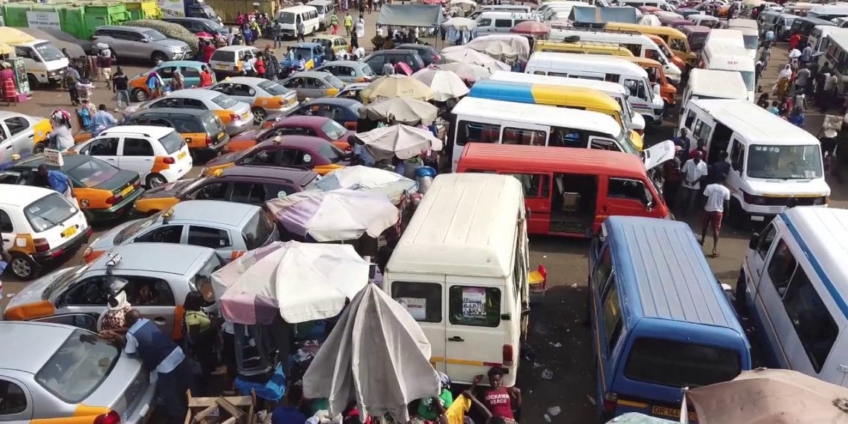

The Ghana Private Road Transport Union (GPRTU) is calling on the government to scrap taxes on petroleum products within two days, or face pressure to increase transport fares nationwide.
Samuel Amoah, Deputy Public Relations Officer of GPRTU, made the ultimatum during an interview on the AM Show, citing the latest fuel price spike and its cascading impact on operators.
"We came up with this release and gave the government two days to do something about it," Amoah said."If they fail to do what this increment can,
then we have no option but to organise ourselves to request an increment of transport fares for our members."
The ultimatum comes as the National Petroleum Authority announced new ex-pump price floors for April 1 to April 15, setting petrol at a minimum of GHS 13.30 per litre and diesel at GHS 17.10 per litre.
This represents a sharp jump from the previous pricing window ending March 31, when petrol and diesel price floors were set at GHS 11.57 and GHS 14.35 per litre, respectively.
The fuel price surge has been triggered by rising geopolitical tensions in the Middle East.
Following the United States' initiation of war against Iran on February 28 in "Operation Epic Fury", escalations threw global markets into chaos. Retaliatory strikes by Iran and the closure of the Strait of Hormuz sent global oil prices soaring past $100 a barrel.Global crude oil prices have surged by approximately 26.21 per cent, climbing from $86.2 per barrel to $109.23 per barrel within the current pricing window.
The anticipated hikes are also attributed to marginal depreciation of the Ghana cedi against the US dollar, moving from an interbank rate of GHS 10.91 to GHS 11.05 per dollar.
Amoah pointed to multiple cost pressures beyond fuel: spare parts prices have surged, insurance policies have increased significantly, and DVLA taxes on vehicle licensing and renewal have climbed sharply.
According to Amoah, insurance premiums for commercial buses have jumped dramatically. Printer buses that previously paid 933 cedis now pay 1,194 cedis—a rise of over 260 cedis.
Toyota minibuses saw similar increases, moving from 837 cedis to 995 cedis. DVLA penalties for late vehicle insurance renewal have more than doubled, he added.
The union said it would hold an internal meeting to assess the situation and present a proposed fare adjustment to the Ministry of Transport for final approval. However, Amoah suggested the decision ultimately rests with government action on taxes.
"What the government, the president is saying is something they can't control right now, but the transport operators may be forced to," Amoah explained.
Credit/Myjoyonline.com