


 Hot News
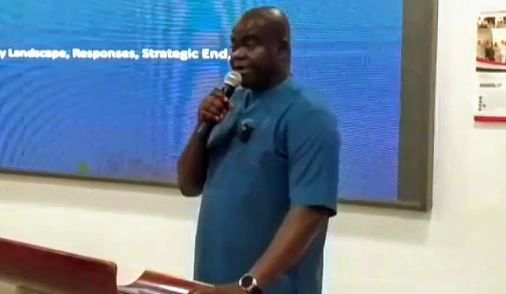
Central Region Serves a Human Trafficking Transit Route, Exposing Communities to Vulnerability– Nat'l Security Technical Advisor
 Oct 13 2026
 8
8Dr. Mohammed Bako, Technical Advisor to the National Security Coordinator, has identified the Central Region as a transit route for human trafficking, warning that the situation exposes some communities to heightened security vulnerabilities.
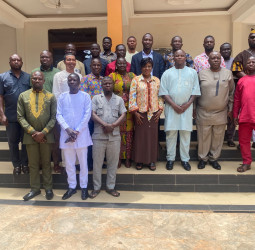
He made this known at a regional stakeholders’ engagement on the review of Ghana’s 2020 National Security Strategy.
Dr. Bako explained that the region serves as a transit jurisdiction for the recruitment of minors from coastal communities, while the recruitment of young women and men through social media continues to increase.
He added that human trafficking for domestic servitude, both within Ghana and abroad, as well as migrant smuggling and narcotics trafficking, had also been identified as security concerns requiring urgent attention.
According to him, there is the need to develop intelligence-led responses, strengthen institutional capacity in financial investigations, and improve prosecution as key instruments in combating these threats.
The Technical Advisor further identified other security challenges confronting the region, including land and chieftaincy disputes, electoral tensions, illegal mining and its associated consequences, cyber fraud, and mounting pressure on coastal fishing resources.
He noted that the draft National Security Strategy, seeks to shift Ghana’s security doctrine from the traditional focus on state security to the security of individuals, while moving from a reactive approach to one that anticipates and prevents emerging threats.
Dr. Bako stressed that national security should not be considered the sole responsibility of the uniformed services but should involve traditional authorities, Metropolitan, Municipal and District Assemblies (MMDAs), faith-based organisations, educational institutions, transport unions, the media, and the general public.
In an address delivered on behalf of the Central Regional Minister, Mr. Andrew Kwesi Kumah, Deputy Director in charge of Administration at the Central Regional Coordinating Council, said the region’s extensive coastline, tourism assets, growing urban centres, and strategic location along the coastal corridor presented both economic opportunities and security concerns that required attention in the national strategy.
Mr. Kumah also cited statistics from the Cyber Security Authority indicating that approximately 4,604 confirmed cyber incidents were recorded in Ghana in 2025, including 1,799 cases of online fraud.
He said these development reinforces the need for stronger institutional coordination, increased public awareness, resilient communities, and timely intelligence sharing to address emerging security threats.
Mr. Kumah therefore urged participants at the engagement to contribute to the review process with candour, patriotism, and professional objectivity to ensure that the revised National Security Strategy adequately address the country’s evolving security needs.
Sompaonline.com// Eric Annan
Leave a Reply
Cancel Reply
Popular News



VOTE FOR CHAMPION

Who Wins NPP National Chairman


Recent News

Gallery





Recent Comment
-

Please why you don't consort the Pragya operators Leaders for their side of view, Don't be a one side reporter because your station is professional, Please news editor tell your news reporter and come once again and the Pragya leadership and know their side of view THANK YOU. I am the Chairman of the Pragya operators association This is my contact number 0546801415 you can call me.

-
JOaALsGDyyqGkjVxLEgVbOQ
-
tgqZAUZcAUYbCspuboijcs