
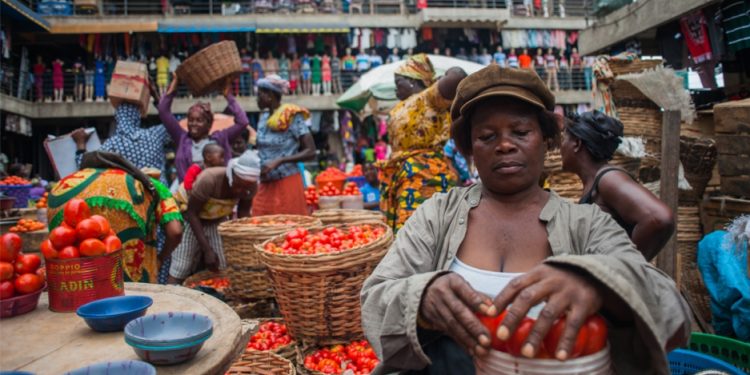

Food prices were at the centre of Ghana’s inflation story in December 2025, as the country recorded a 12th consecutive decline in headline inflation, driven largely by easing pressures within the food basket.
According to the Ghana Statistical Service (GSS), food inflation fell sharply to 4.9 per cent in December, down from 6.6 per cent in November, making it the single biggest contributor to the overall slowdown in inflation.Food and non-alcoholic beverages account for 42.7 per cent of the Consumer Price Index, meaning changes in food prices carry significant weight in determining how inflation moves.
Despite the overall moderation in food inflation, several commonly consumed food items recorded exceptionally high year-on-year price increases, continuing to place pressure on household budgets.
At the top of the list is ginger, which recorded a year-on-year inflation rate of 76.7 per cent, making it the fastest-rising food item in the CPI basket. Green plantain, a staple in many Ghanaian households, followed closely with a 69.4 per cent increase, while charcoal, widely used for cooking, rose by 66.8 per cent.
Other food items recorded sharp price increases in 2025. Avocado prices surged by 42.8 percent, while palm fruits went up 35.2 percent. Fresh coconut rose by 34 percent, and both crab and snail recorded inflation above 30 percent.
These items featured prominently among the top contributors to overall inflation, not only because of their high price increases but also due to their frequent consumption. Charcoal and plantain, in particular, remain essential household items, magnifying their impact on the cost of living even as inflation slows overall.
Food items pulling inflation down
While some food prices surged, a large group of staple food items recorded significant price declines, helping to offset inflationary pressures elsewhere in the food basket.
Leading the downward trend were: Garden eggs which fell by 56.7 percent, while kontomire, or cocoyam leaves, dropped by 51.9 percent. Fresh tomatoes declined by 39.8 percent, and both cabbage and pawpaw recorded price falls of over 40 percent.
These declines had a dampening effect on food inflation, particularly because these items are widely consumed and form the base of everyday meals. Improved supply conditions, favourable harvest outcomes, and seasonal price corrections are likely factors behind the sharp drops.
Month-on-month pressures persist
Although food inflation slowed on an annual basis, food prices still increased by 1.1 per cent between November and December 2025, pointing to ongoing short-term pressures.
Items such as onions, yam, and fish recorded month-on-month increases, reflecting seasonal demand, transport costs, and distribution challenges.
What the food price mix tells us
The December data show that Ghana’s inflation slowdown is not uniform across food items. Instead, it is being shaped by a push-and-pull effect, where steep declines in vegetable prices are counterbalancing sharp increases in items like plantain, charcoal, and spices.
This pattern suggests that inflation in Ghana is becoming more item-specific rather than broad-based, creating room for targeted interventions rather than sweeping price controls.
Why this matters
For households, easing food inflation provides some relief, but the persistence of high prices for key staples means the cost-of-living challenge has not disappeared. For policymakers, the data highlight the need to focus on food storage, transportation, irrigation, and market access, especially for items that continue to drive inflation despite the broader decline.
As Ghana marks a full year of falling inflation, the December CPI release makes one thing clear: what happens to food prices—item by item—will continue to determine how inflation is felt at the market and household level.
Credit/ citinews








 Sompaonline.com offers its reading audience with a comprehensive online source for up-to-the-minute news about politics, business, entertainment and other issues in Ghana