

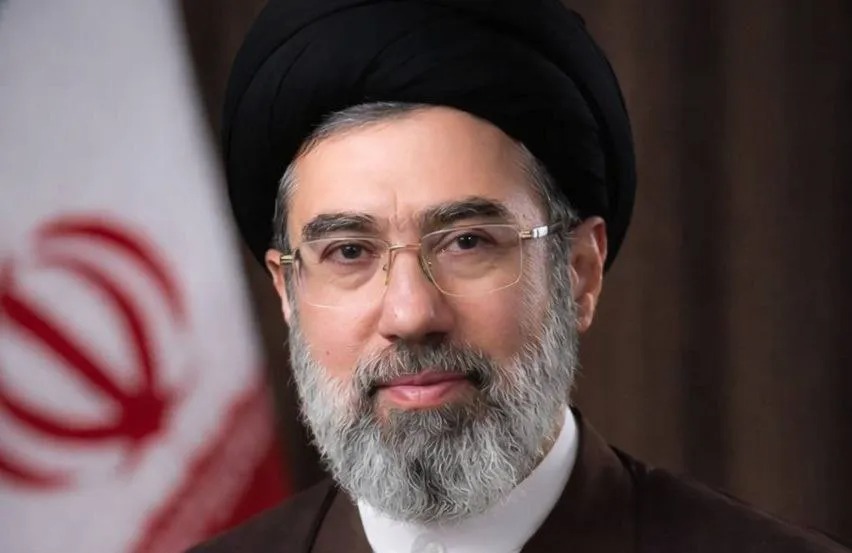

When millions of Iranians poured into the streets in 1979 to end the rule of the former shah, their revolution seemed to have put an end to the practice of passing power from father to son. Not so.
Mojtaba Khamenei, the second son of former Supreme Leader Ali Khamenei, has been elevated to the position his father held for nearly four decades until his death in US-Israeli air strikes. He now sits atop a system badly weakened after the 88-member Assembly of Experts did what many Iranians had hoped it would never do, turning the Islamic Republic into a dynasty.
US President Donald Trump said last week that Khamenei’s appointment as his father’s successor would be “unacceptable” to him.
The US-Israel attack that killed his father also took multiple relatives. Ayatollah Ali Khamenei’s daughter, grandchild, daughter-in-law and son-in-law were all killed in the attack, according to state media. Days later, the late supreme leader’s wife - Mojtaba’s mother - also died of her wounds, according to state media.
Born in 1969, Mojtaba Khamenei received religious training like his other brothers though he never rose to the rank of Mujtahid, the level of Islamic jurisprudence many regime loyalists consider essential for the role of supreme leader. He is married to Zahra, the daughter of former speaker of parliament and Khamenei confidant Gholam Haddad Adel.
For years, Mojtaba kept a low profile, although from the shadows he was a central figure in the vast officialdom of his father’s system. He cultivated close ties to the Islamic Revolutionary Guard Corps (IRGC) and the economic networks that prop up the system.
For Iran observers, his influence was unmistakable, even without holding a senior formal position. In recent years, as he worked in his father’s office, he was increasingly positioned as a potential successor and, in 2021, pictures on social media showed supporters distributing posters on the streets of Tehran that openly promoted him as the next leader.
Many believe he played a pivotal role in pushing for the election of the hardline Mahmoud Ahmadinejad in the 2005 presidential elections. He was known to have mobilized the IRGC’s networks to boost the candidacy of the then-mayor of Tehran, Ahmadinejad, who was up against the better known, Akbar Hashemi Rafsanjani, a Khamenei rival.
By 2009, when millions of Iranians took to the streets to protest the re-election of Ahmadinejad in what they saw as a rigged election, it was clear that Mojtaba was not merely the son of the leader but a political operator in his own right.
The uprising was brutally crushed, marking the beginning of the end of any true domestic reformist movement. Events of that year showed his ascendancy, with protesters on the streets chanting “Mojtaba bemiri Rahbari ro Nabini,” or “Mojtaba may you die so you don’t assume the leadership role.
He was sanctioned by the US in 2019 after the US Treasury accused him of working closely with the commander of the powerful Revolutionary Guards to advance what it described as his father’s “destabilizing regional ambitions and oppressive domestic objectives.”
Sompaonline.com/Prince Atta-Boateng



 Sompaonline.com offers its reading audience with a comprehensive online source for up-to-the-minute news about politics, business, entertainment and other issues in Ghana