
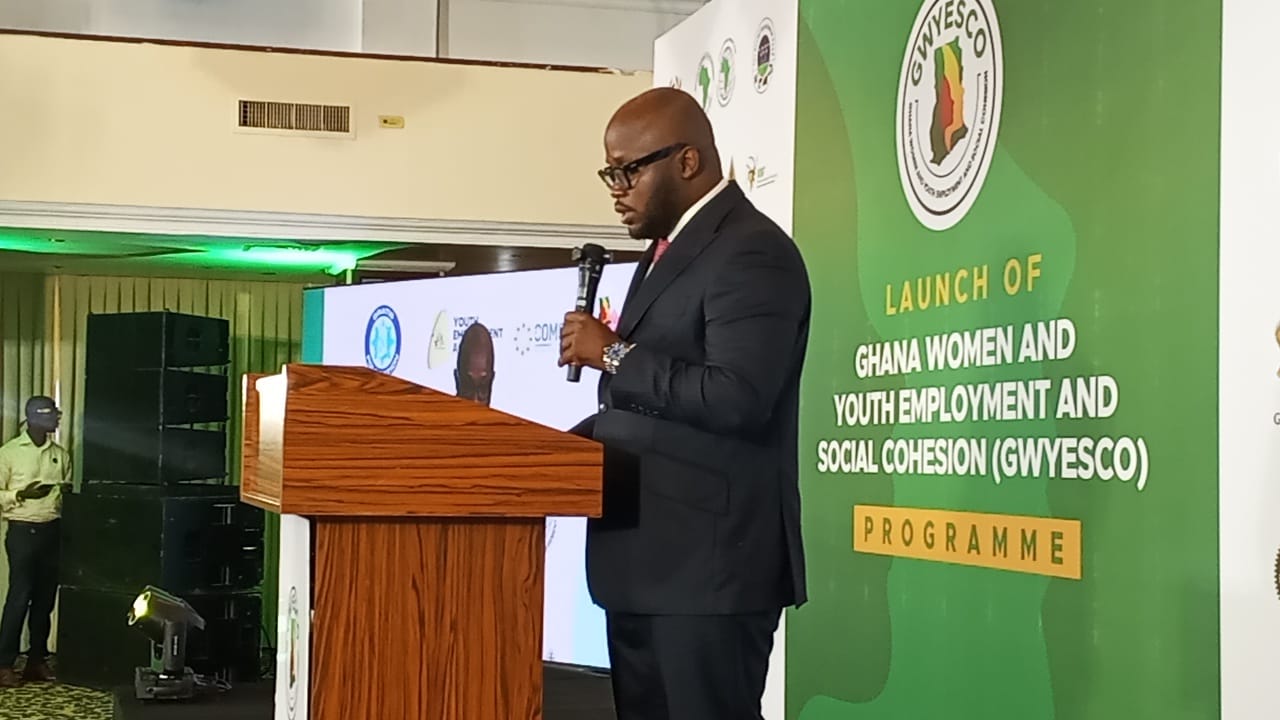


The Social Investment Fund (SIF), a pivotal agency committed to uplifting communities and driving inclusive development in Ghana, has grandly launched the GW ESCO program, which is framed as a profound “national commitment” aimed at addressing the pressing issues of youth unemployment and the economic exclusion of women.
This program seeks to create meaningful job opportunities, foster entrepreneurship, provide essential skills training, and ensure direct access to vital financial resources, ultimately striving to create a more equitable society.
In a powerful statement during the program's launch, SIF Chief Executive Officer, Mr. Abass Adams Nurudeen, Esq., emphasized that this initiative transcends typical development interventions. "This program is more than a development intervention. It is a national commitment to our young people and our women,” he articulated, linking the initiative with the broader mission of enhancing resilience and improving living conditions. The program is strategically crafted to promote economic inclusion and social cohesion through diverse avenues, including robust job creation, entrepreneur support, improved access to finance, and comprehensive skills development initiatives.
Adams pointed out the stark realities facing Ghana and the wider African continent, stressing that youth unemployment and underemployment pose significant threats to economic progress and social stability. He highlighted a troubling trend: the increasing number of young individuals who find themselves outside of education, employment, or training pathways, primarily due to a glaring lack of market-relevant skills. At the same time, many women entrepreneurs contend with formidable challenges in accessing not just finance, but also the necessary technology and markets to thrive.
“In fragile and underserved communities, economic exclusion often fuels frustration, migration pressures, vulnerability, and social tension,” he cautioned, arguing that such dynamics are a breeding ground for societal issues. The GW ESCO program is consequently designed to respond directly to these stark realities by providing targeted support to those most affected.
The SIF, as the implementing and coordinating agency, was established with a clear mission to support Ghana in its efforts to alleviate poverty while promoting inclusive development. Adams articulated that GW ESCO marks a significant advancement towards that goal, as it directly assists thousands of women and young people, equipping them with necessary skills, resources, and opportunities essential for achieving economic independence and success.
Adams outlined a clear and detailed strategy for the program, which consists of three main pillars: 1) Championing market-driven training that imparts industry-relevant skills specifically tailored to women and youth; 2) Expanding access to both financial and non-financial services for Micro, Small, and Medium Enterprises (MSMEs) owned by women and youth; 3) Strengthening institutional capacities while incentivizing systems to ensure sustainable delivery and accountability in all program activities.
Beneficiaries of the GW ESCO initiative will gain invaluable skills in digital technologies, technical professions, vocational training, agribusiness, and the creative industries. The program envisions a comprehensive upgrade of Technical and Vocational Education and Training (TVET) centers, with plans to renovate existing facilities, construct new ones, and ensure they are well-equipped to meet modern educational needs. Additionally, MSMEs will be provided with robust entrepreneurship support, essential business development services, and pathways to enhance their access to financing institutions.
Looking ahead to the year 2029, the program sets ambitious and transformational goals: it aims to skillfully equip 22,000 women and youth for both wage and self-employment, facilitate the construction or renovation of numerous TVET centers, empower over 28 million individuals in STEM (science, technology, engineering, and mathematics), digital, and creative industry skills, train an impressive 10,000 women and youth-owned MSMEs in entrepreneurship, and ensure that 8,000 businesses owned by women and youth gain crucial access to financing.
What truly distinguishes the GW ESCO initiative is its innovative results-based financing mechanism. “Under this approach, financing is linked directly to measurable results and verifiable outcomes,” Adams clarified. This approach signifies that investments are not solely focused on the activities being conducted, but more importantly, on the actual tangible impact achieved as a result of those activities.
In conclusion, Adams passionately summarized the essence of the program by asserting that when women and young people are equipped with the essential skills, access to financial resources, and a renewed sense of hope, “nations thrive.” This strong commitment represents not only an immediate response to prevailing economic challenges but also lays the groundwork for a more prosperous and inclusive future for all.
Sompaonline.com/Bismark Oppong









 Sompaonline.com offers its reading audience with a comprehensive online source for up-to-the-minute news about politics, business, entertainment and other issues in Ghana