


 Hot News
 Sep 03 2026
 173
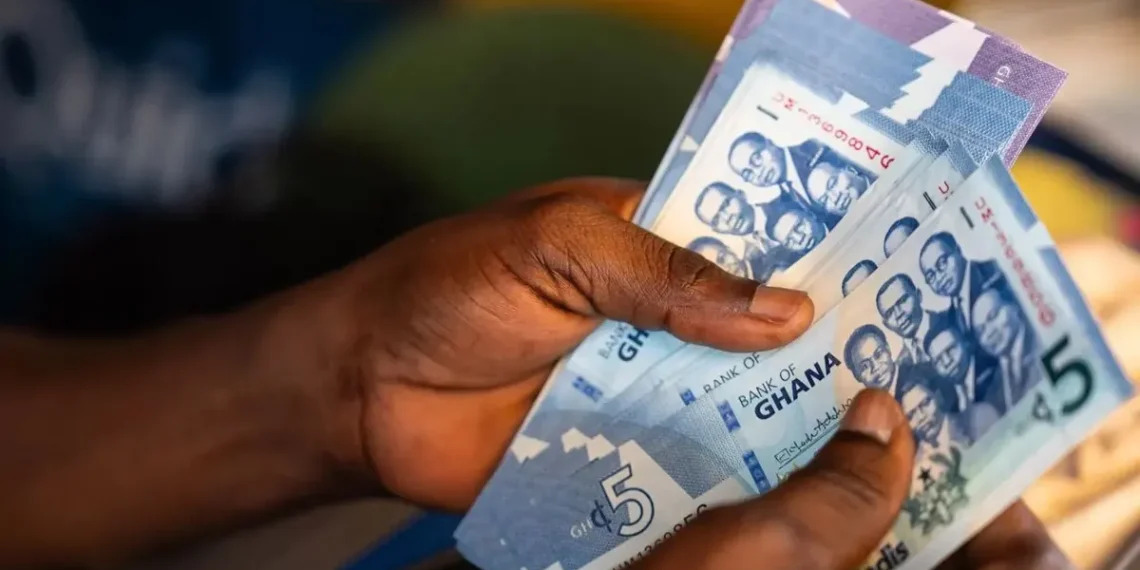
173The World Bank has hailed the cedi’s sharp turnaround in 2025, with interventions by the Bank of Ghana playing a crucial role in improving foreign exchange market conditions and supporting stability.
In its 10th Ghana Economic Update, the Bank pointed out that cedi’s real effective exchange rate appreciated by 28% while the nominal effective exchange rate rose by 26% during the year under review.The World Bank notes that an external sector assessment found Ghana’s current account and exchange rate to be broadly in line with economic fundamentals and desirable policies, taking into account the country’s position as a commodity exporter and the scale of the recent appreciation.
Despite the strong appreciation, the World Bank notes that the sharp rise in the value of the cedi during the second quarter of 2025 also created exchange rate uncertainty.
This contributed to a widening gap between the official and parallel-market exchange rates.
The parallel-market premium averaged 12.4% between June and December 2025, indicating persistent imbalances in the foreign exchange market despite the broader appreciation of the currency.
In response, the Bank of Ghana introduced a comprehensive Foreign Exchange Operations Framework in November 2025.The framework was designed to improve transparency in the central bank’s foreign exchange operations, strengthen reserve accumulation and help manage excessive exchange rate volatility.
Gains in 2026
The World Bank notes that the cedi’s strong performance in 2025 was followed by some depreciation in 2026.
After appreciating by approximately 29% against the US dollar between January and December 2025, the cedi depreciated by 8.1% in the year to June 2026.
The depreciation was driven largely by increased demand for foreign exchange from the energy sector and dividend payments by some private corporations.
This occurred despite continued strong foreign exchange inflows supported by Ghana’s trade surplus.
The Bank of Ghana has described the movement as normal exchange rate volatility under Ghana’s managed floating exchange rate regime, with the new FX operations framework serving as an anchor for market operations.
The World Bank also points to some improvement in the parallel foreign exchange market.
As the cedi stabilised into early 2026, the premium between the official and parallel exchange rates narrowed.
The premium averaged 8.1% in the year to June 2026, down from the 12.4% average recorded between June and December 2025.However, the World Bank notes that the premium remains elevated, suggesting that underlying pressures in the foreign exchange market have not been completely eliminated.
BoG interventions
The developments underline the importance of the Bank of Ghana’s foreign exchange management framework in navigating the cedi’s sharp swings.
While the currency’s appreciation has helped ease imported inflationary pressures and improve the broader macroeconomic environment, the subsequent depreciation highlights the sensitivity of the exchange rate to seasonal foreign exchange demand and corporate outflows.
The World Bank’s assessment suggests that the cedi’s turnaround has been significant, but sustaining that stability will require continued policy credibility, stronger reserve buffers and effective management of foreign exchange market pressures.
Credit:Citinews
Leave a Reply
Cancel ReplyRelated News
Popular News



VOTE FOR CHAMPION

Who Wins NPP National Chairman


Recent News


Gallery






Recent Comment
-

Please why you don't consort the Pragya operators Leaders for their side of view, Don't be a one side reporter because your station is professional, Please news editor tell your news reporter and come once again and the Pragya leadership and know their side of view THANK YOU. I am the Chairman of the Pragya operators association This is my contact number 0546801415 you can call me.

-
JOaALsGDyyqGkjVxLEgVbOQ
-
tgqZAUZcAUYbCspuboijcs